
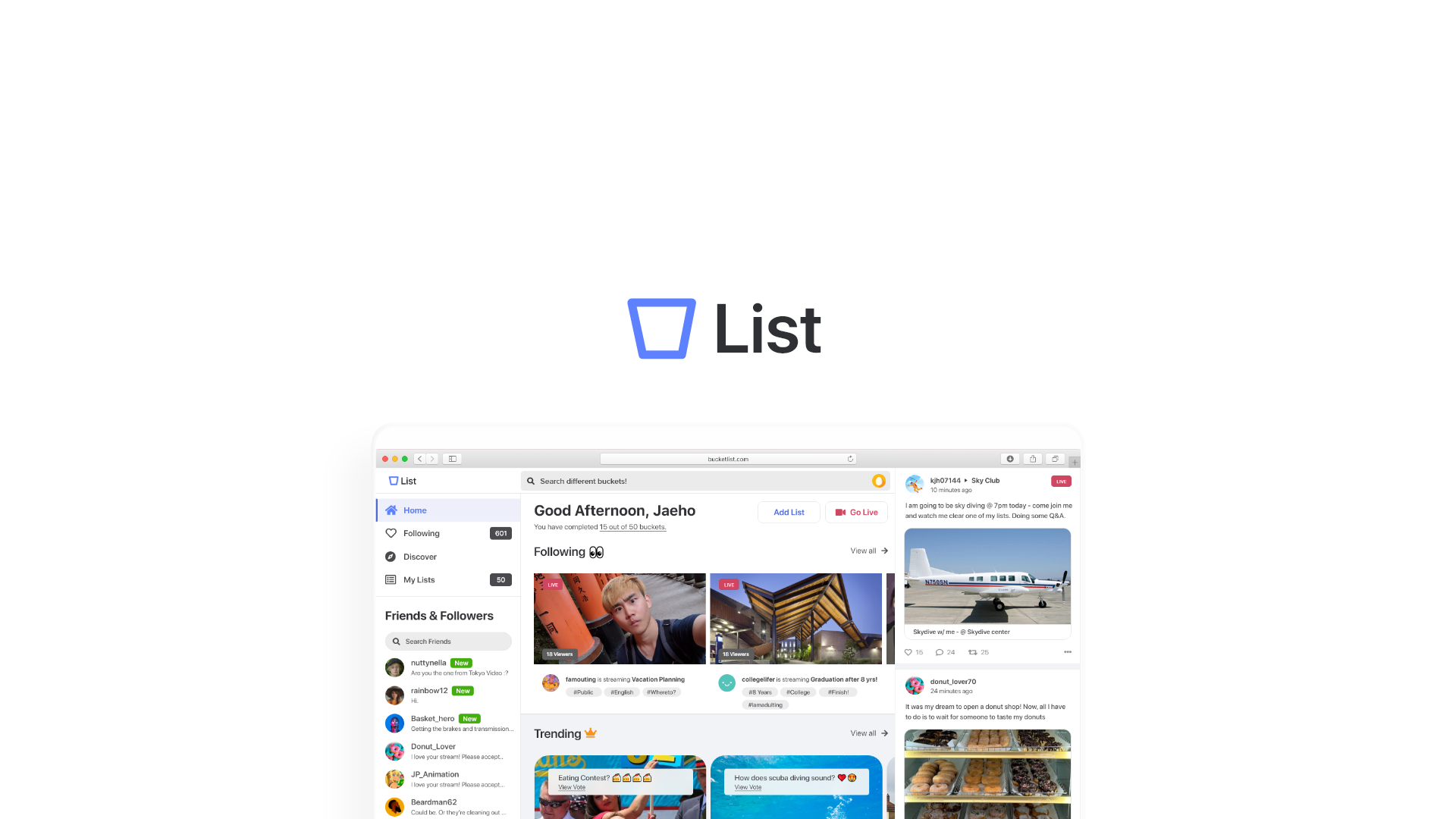
Overview
Timeline
June 2020 - Dec 2020, 6 months
Responsibility
UI/UX, Visual Design, Research, Project Management
This case study was a solo project.
Designing inclusive and accessible online communities that share their own wish lists.
About more than half of Americans plan to check off a wish list destination for their first post-pandemic trip.
The Problem

Through my research, observations, and 10 interviews, multiple questionnaires from lovely Slack communities, I identified key problems in why and how it will take some time to knock off their wishlists.
1. The cost of each bucket list was too high/unreachable.
2. COVID-19 exacerbates the inaccessibility of travels and hobbies outside of their homes.
3. Many of the bucket lists are unique and will require some challenge.
My Solution: A live streaming website for people with a bucketlist of things that they like to
share.
Discover similar tastes with others.
With Bucket List, communities are not limited by physical proximity. Instead, they can form over similar interests, demographics, and activities with friends, families, and the public eye.
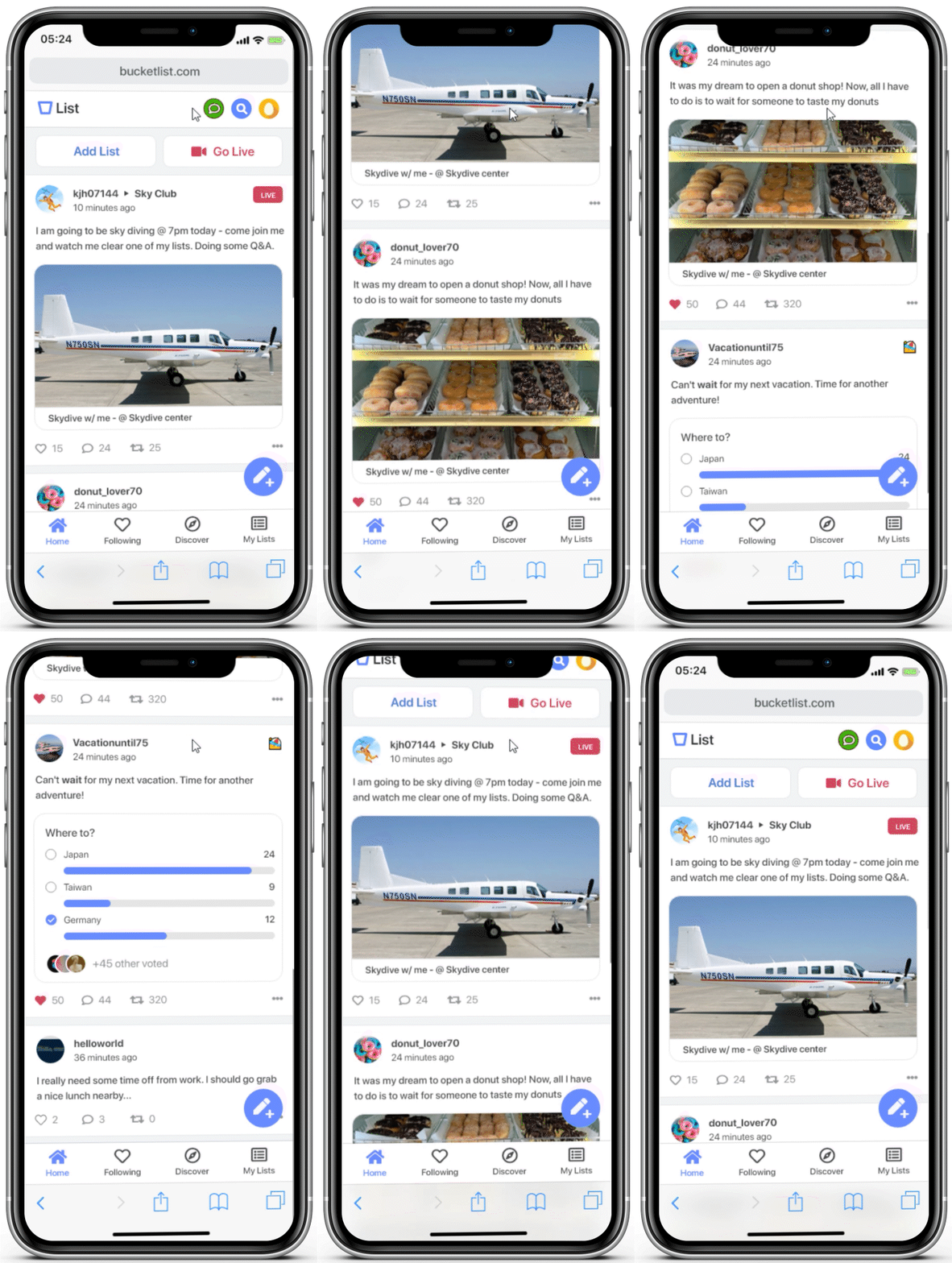
Many different lists to pick from.
At any time of the day, Bucket List users can ask the public for polls and discuss the users next bucket list.
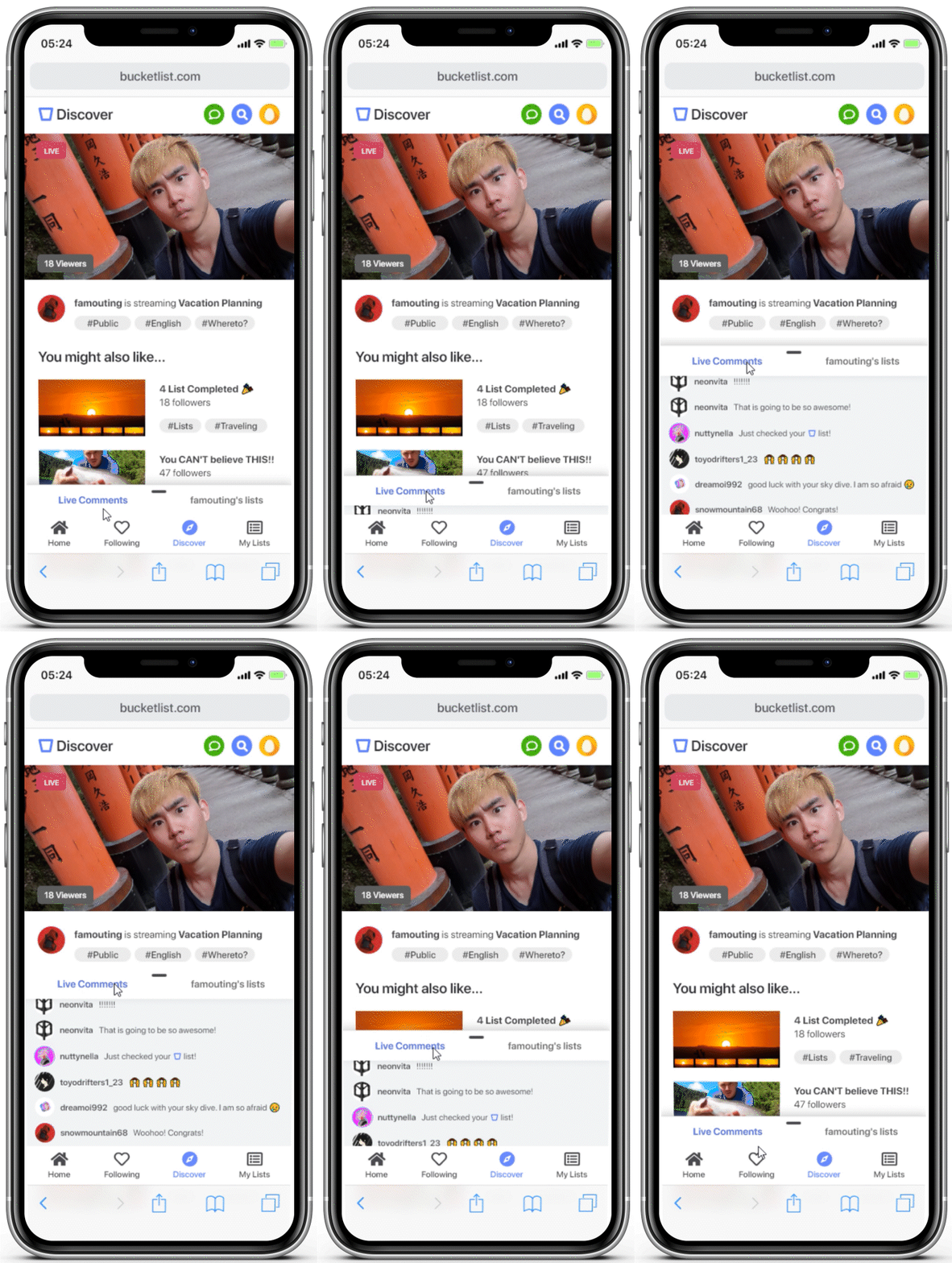
Discover to see what other users are
up to.
Watch and share your insight with the host and interact together.
The Process
Exploring the domain, defining the problem, ideating, and refining the solution.
During the 6 month span of the project, I did project management, user research, interviews through online communities, and video chat, and UI and UX designs.
Visiting locations / doing activities to see how fulfilling it is to complete a bucket list.
Exploring…
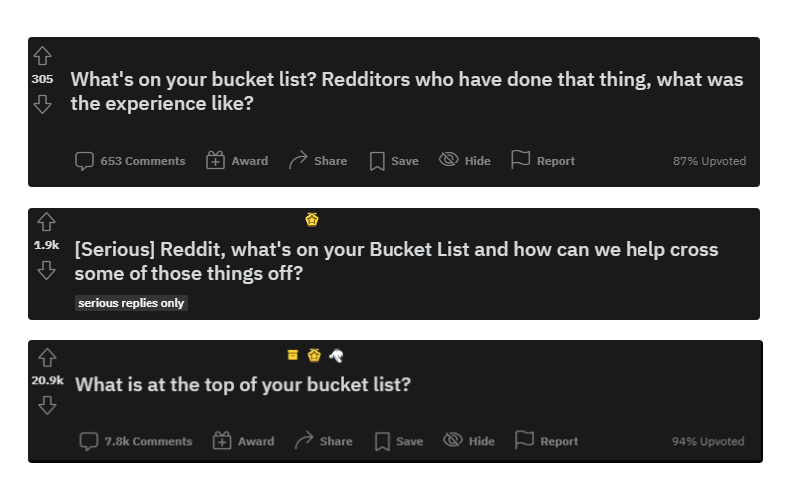
I went into America’s biggest anonymous website. I went to Reddit because of the large communities for each subreddit (over 100k active online users in /AskReddit) I started digital eavesdropping on many other sub-communities to find more information.
Defining the problem.
I synthesized the research through a journey map and chose two key moments to focus on. This helped me form an idea of the key insights around a more specific problem and target demographic for the application.

First Use > Finding A Community > Doing A Bucket List > First Live To Audience > Sharing with Users > Gaining Followers / Friends
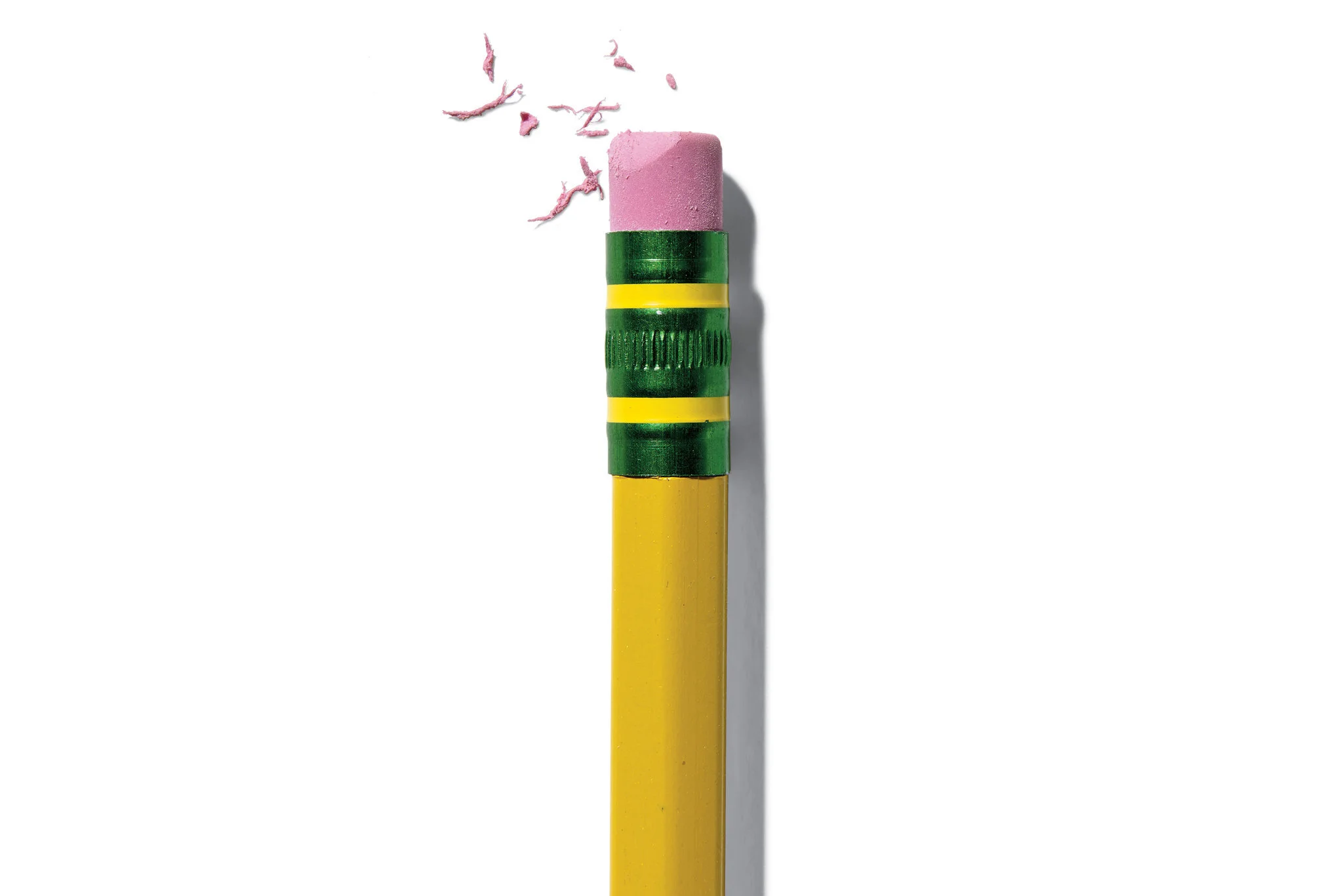
Many people have second thoughts when added the list to the bucket list.
People write and erase bucket list all the time. It also depends on their age and background environment.Design Decision: The designs should help people join or form communities.

Sometimes people want to keep the bucket list to themselves.
Not everyone is comfortable sharing their own bucket list to the public.Design Decision: The design should give people immediate access to creating lists as well as sharing to public/private.
20 Initial sketches / 5 Storyboards / 3 Feedback Sessions
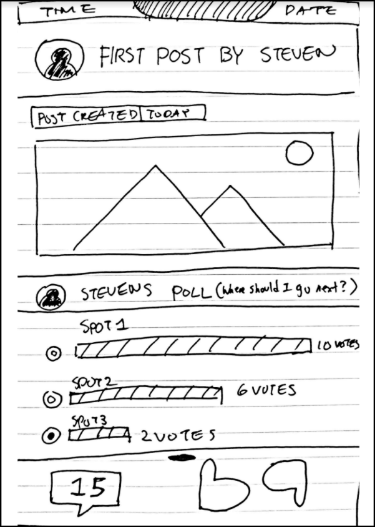
I narrowed down the concepts first internally, and then by sharing them with our target demographic for feedback and inputs.
From initial sketches to expanded storyboards, I narrowed down the concepts and started some surveys online to decide which aligns best with the design goals. The target demographic allowed me to first verify, what the problems are, and then dive into whether there’s interest in the way the solution resolves it.
I first pursued a concept of “meeting buddies and completing the lists together” which would make doing a bucket list much for fun and efficient.
But then COVID-19 hit the US, and in-person meetings were shut down. I changed my direction by re-focusing on online community building.

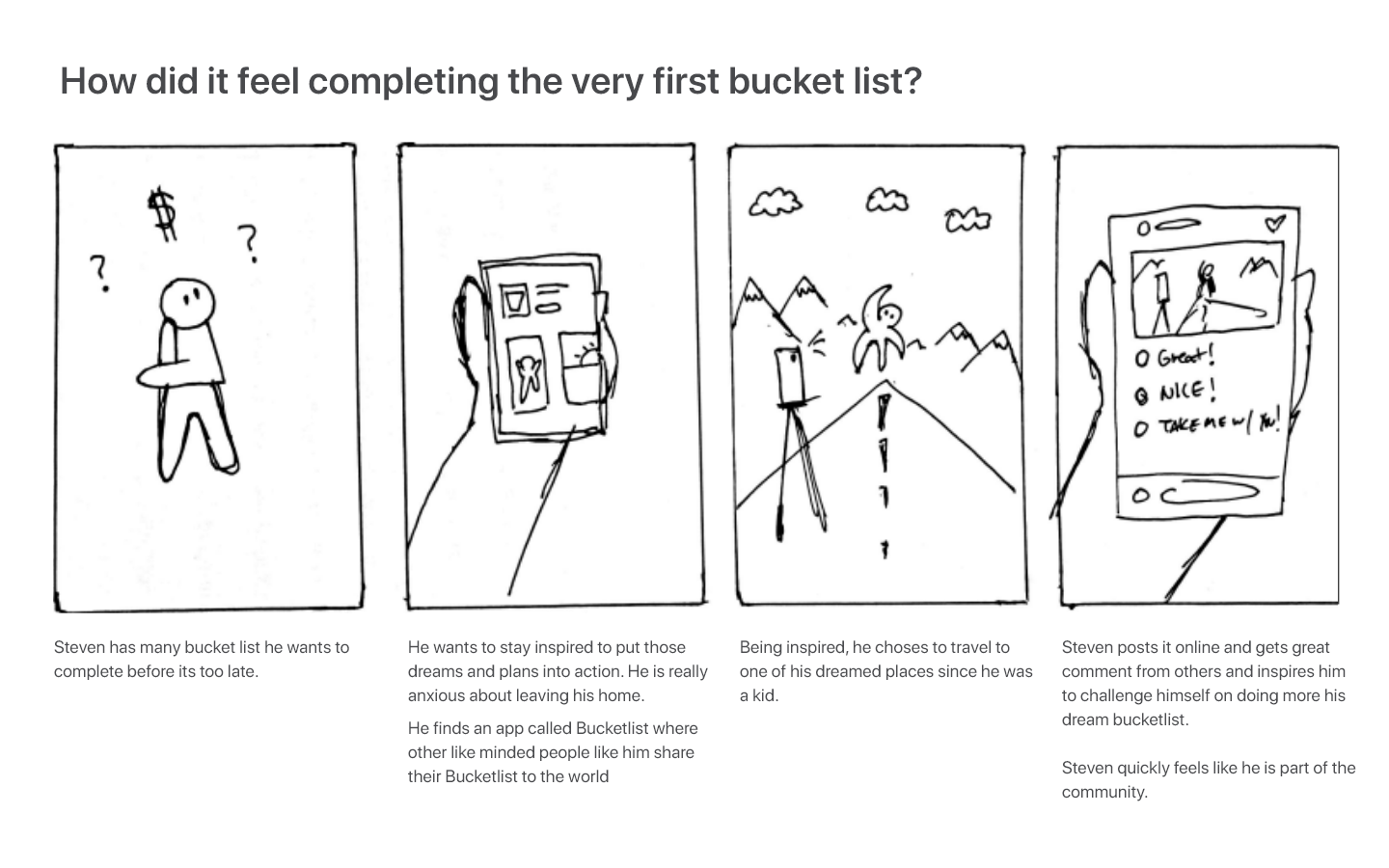
Refining the solution.
The concept was the “Twitch for bucket lists” creates online communities, who want to share it to other users around the world.
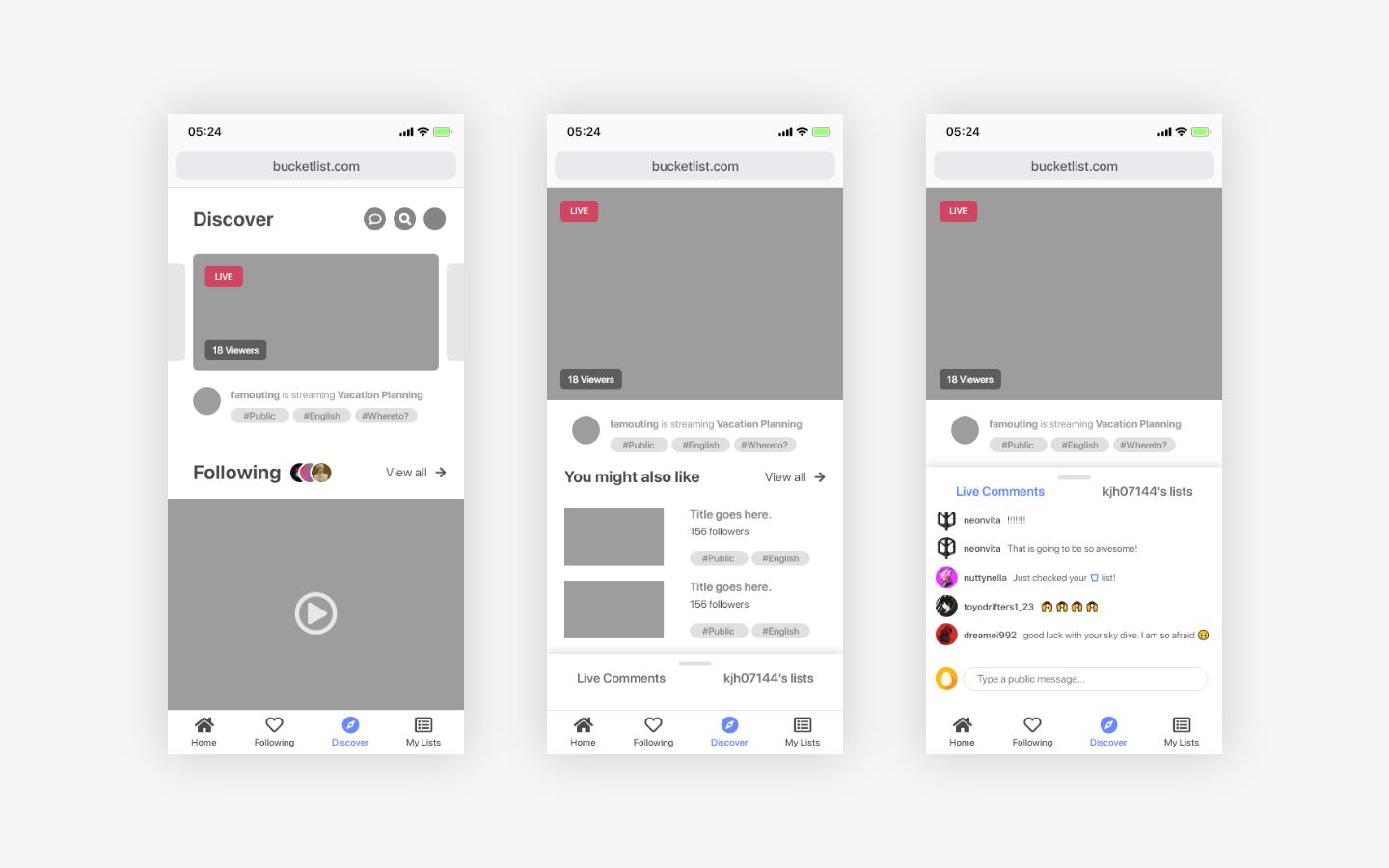
Live streaming was popular amongst the research participants for its long-form content. This format allowed people to watch and participate in other users’ bucket lists and resonate with similar achievements or goals.
Setting up interviews / RITE ( Rapid Iterative Testing and Evaluation) for feedback.
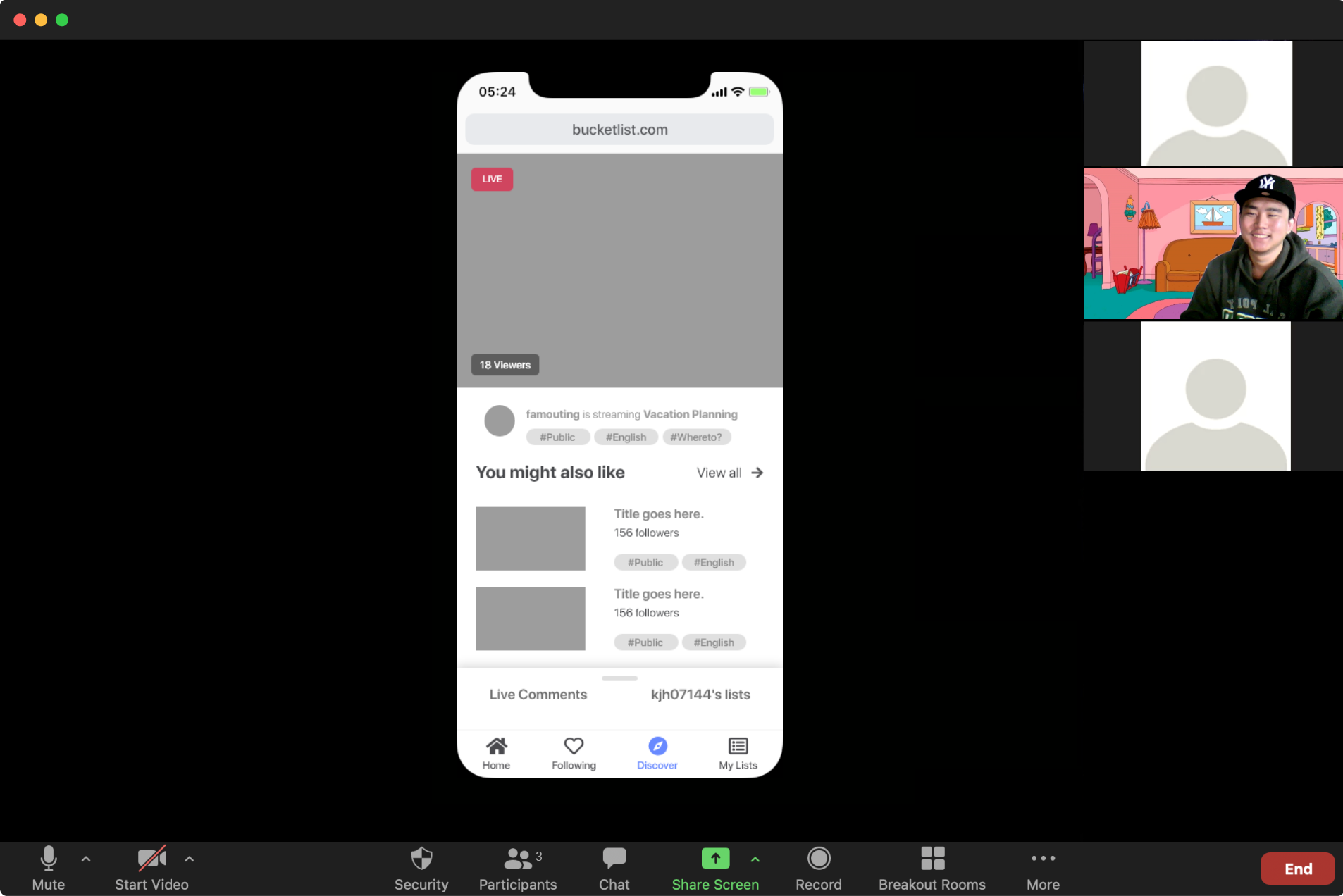
RITE in progress using the rough prototype to gather feedback and future iterations. (Due to privacy, images has been modified)
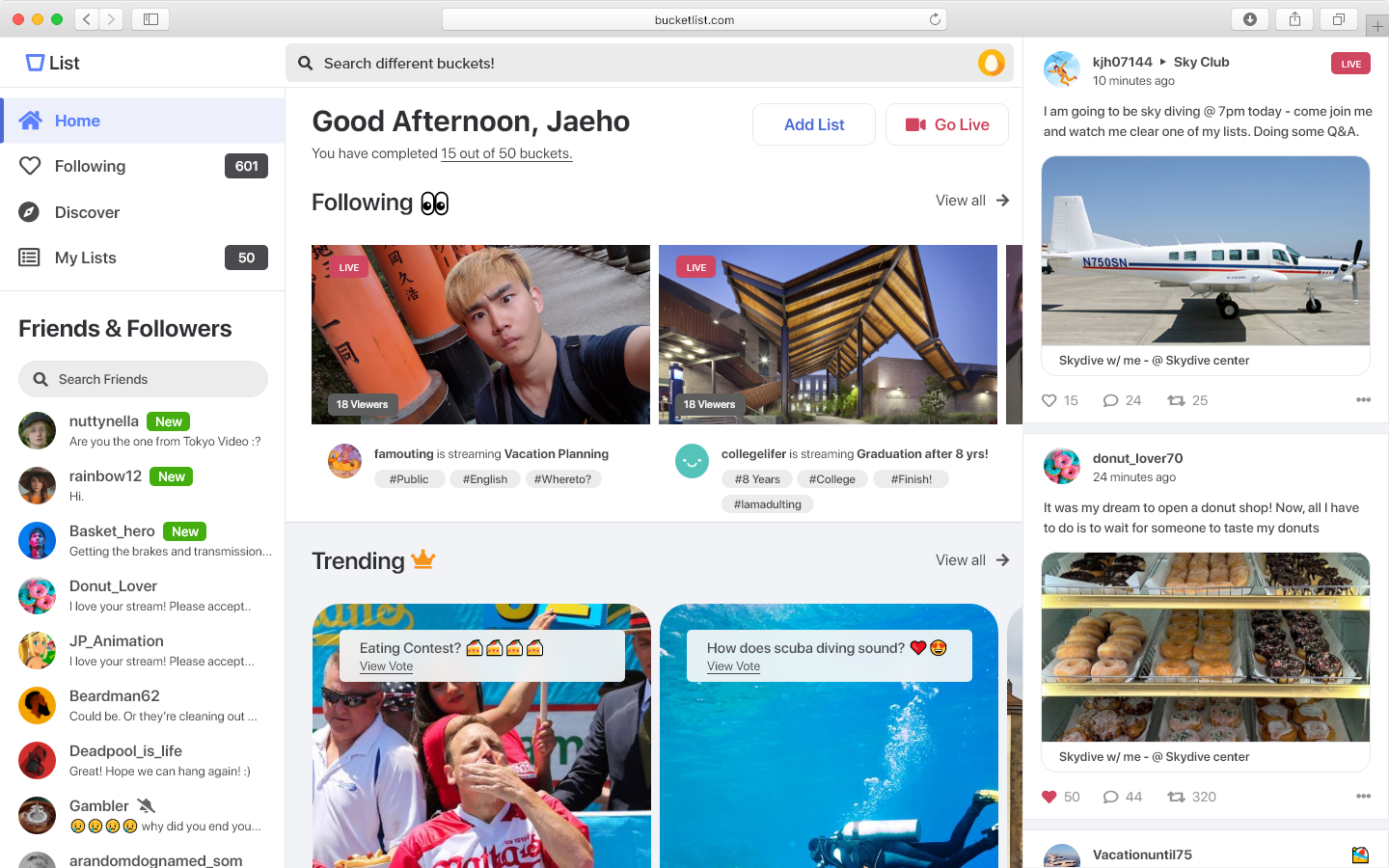
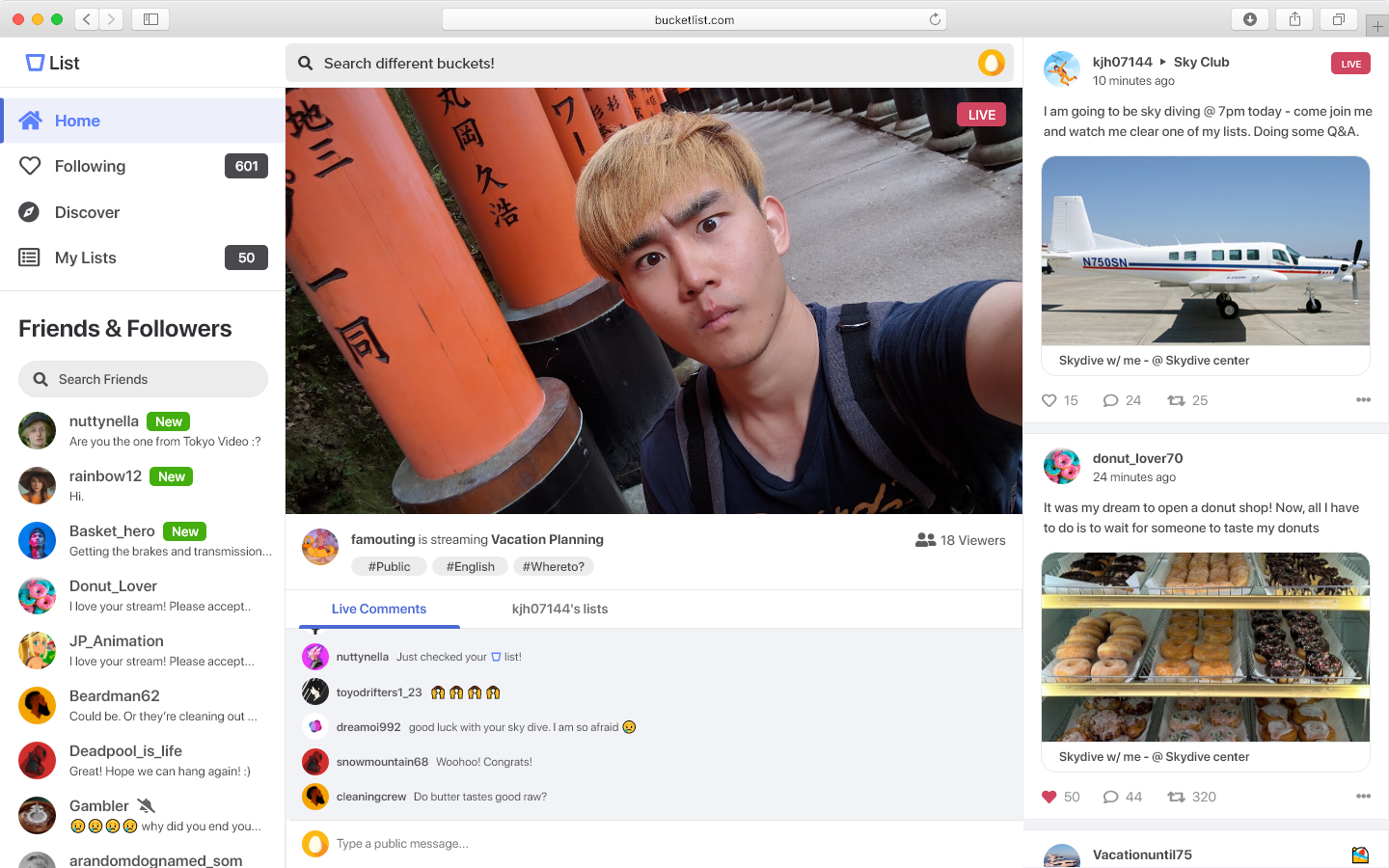
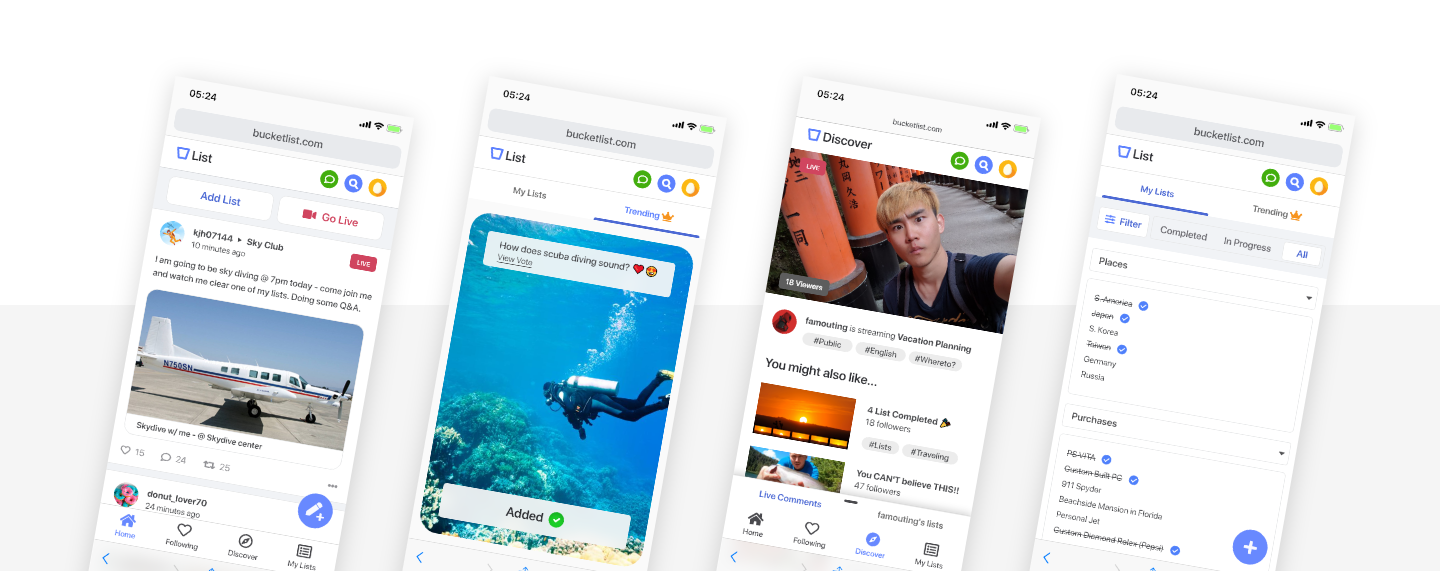
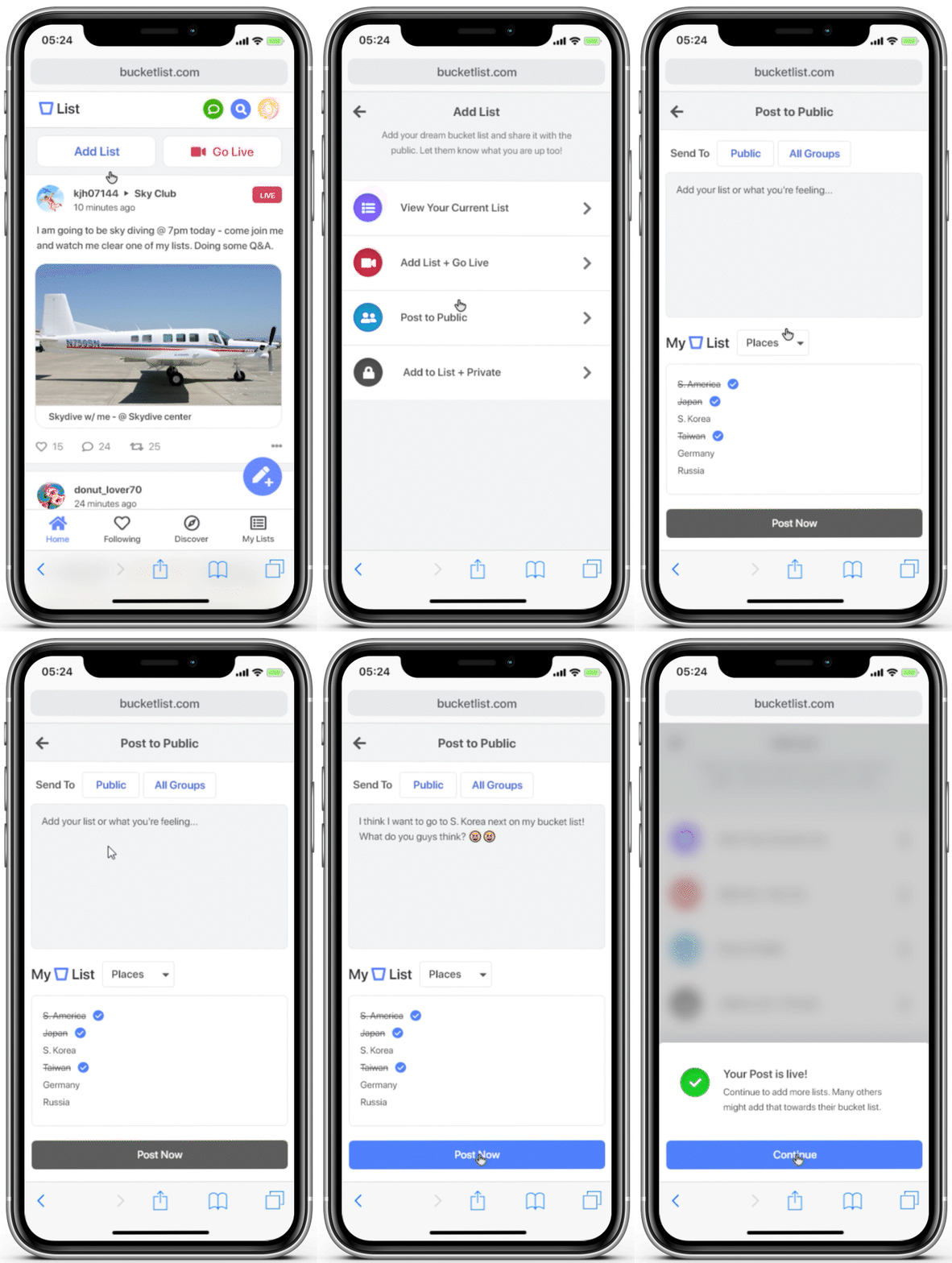
I designed BucketList, a platform that addresses the needs of young adults who wish to fulfill their bucket lists and share them through features including live streaming, posting, and adding bucket list for future goals and dreams.
USER FEEDBACK / NEXT STEPS
“It’s video-based and also intuitive. it also has great interaction, it’s modern, it has a balance of public and private - Would like this application to become reality.”
- Anonymous research participant.
This experience taught me how I can conduct user interviews and receive constructive criticism from people of different ages/backgrounds and most importantly how it is important to keep track of time responsibility.
This project made me much more alert when being organized. Color coding with dates and priorities making sure to have enough time when presenting and leaving enough time for others. Lastly, I learned that design should be leveraged as a tool that can benefit people and their lifestyles. 🤗
Next Steps
Explore design options for other platforms devices
Continue to iterate and validate my design through testing, and strive for constant improvements
Explore new design opportunities to integrate more interactive features